


Planning a Large Outdoor Sectional Layout for Entertaining
A large outdoor sectional works best when guests can reach its seats, face one another comfortably, and move between the house and yard without crossing the middle of the conversation. Plan those routes before deciding how much of the patio the sofa should occupy.
Start with the gatherings you actually host. An evening with two visiting couples needs a different arrangement from a large family event where people move between dining and lounging. Your permanent seating should support normal use, with a deliberate plan for occasional extra guests rather than the largest possible sofa in every available corner.
Mark the routes that must remain open
On a sketch of the patio, connect the house door to the yard, steps, and other regularly used areas. Mark doors in their open position and identify fixed obstacles. The remaining space is where the seating group can be developed.
Avoid selecting the sectional's orientation solely from the view in a photograph. A long back facing the house might create an attractive outdoor room while forcing every guest to walk around it. In another patio, that same position may separate lounging from a useful open route.
Test both arrangements with temporary markers. Carry a tray from the house, walk toward the dining area, and approach the seats from the yard. Use the routes your guests will take rather than a single convenient path from the edge of the drawing.
Decide whether the group belongs at an edge
Positioning the sectional near an edge can leave a larger open area elsewhere. It may be useful on a patio shared with outdoor dining. Check that the placement still allows whatever access the property and furniture require, including doors, maintenance access, and the manufacturer's guidance.
A freestanding arrangement can organize a large patio into separate zones. In that case, the back of the sofa becomes visible from another part of the space. Look at rear photographs and check how the assembled modules appear from all likely viewpoints.
Neither choice requires filling the entire patio with furniture. An open area can provide room for movement or a clear connection between zones. A large sectional should have a purpose within the layout rather than becoming a way to occupy unused paving.

Treat the corner and the ends differently
An L-shaped group creates several types of seating positions. Someone at an end may have an easy route out and an armrest nearby. A person in the corner may be farther from the entrance and share legroom with adjacent users.
During a test, place people in the positions you expect to use. Ask one person to leave the corner while others remain seated. Then check whether everyone can participate in the same conversation without twisting or leaning around another guest.
If the corner is mainly a lounging position for your household, keep that use in the plan. Do not force it to serve as a fully equivalent guest seat just to reach a target number. The stated seating capacity is helpful product information, but your preferred spacing determines how the arrangement feels in practice.
Give an independent chair a clear job
A separate chair can face the sectional, complete a conversation group, or offer a seat closer to the open side. Its position should contribute to the gathering rather than create an obstacle opposite the only entrance.
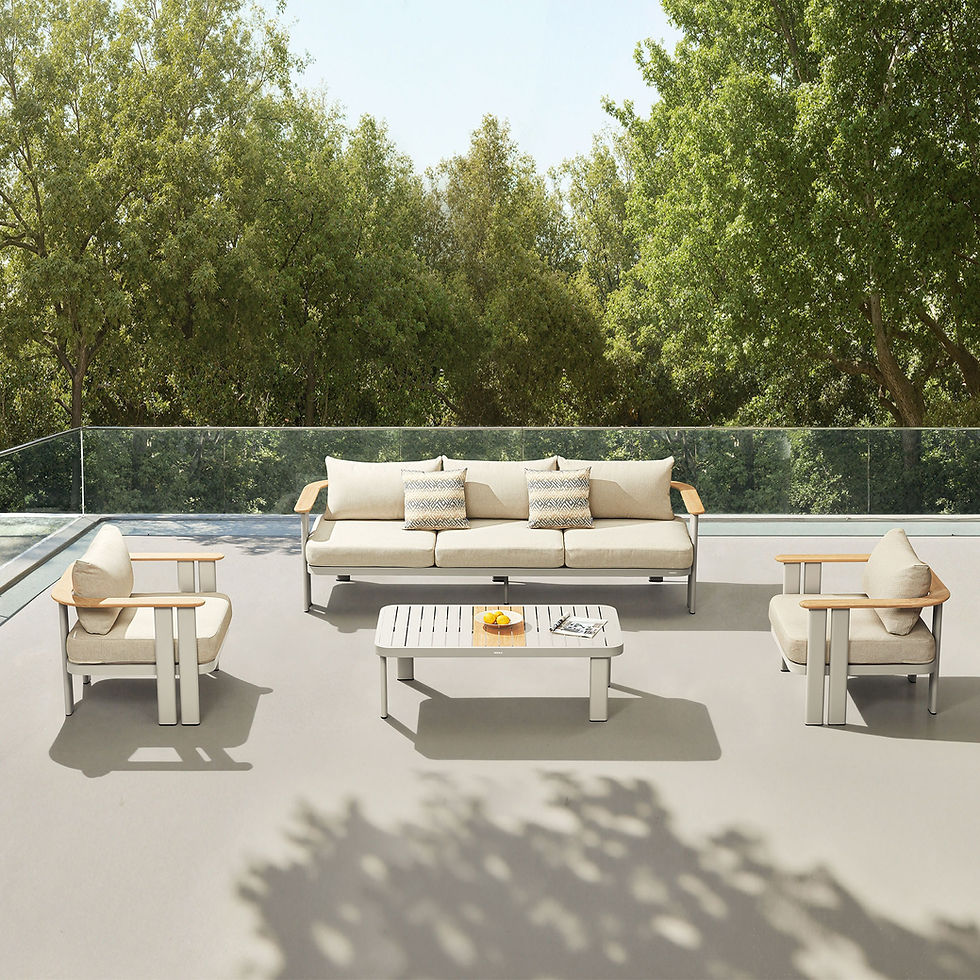
HIGOLD's Wing 204980 product information lists sectional components, a single sofa, and a coffee table. That package illustrates why a large seating set may include both connected and independent pieces. The single seat needs its own footprint and route even though it coordinates visually with the sectional.
Place that chair after the sectional outline is established. Try it slightly angled toward the center, then test another position closer to an end. Ask whether both the seated person and someone walking past can use the space comfortably. A matching chair does not have to sit symmetrically to be useful.
Put reachable surfaces where they are needed
One central coffee table may serve the middle of a long sectional better than its far end. Sit in each position and test where a drink or small plate would go. Keep the activity realistic: a coffee table should not be assumed to provide the same experience as a dining table.
If an end seat needs another surface, try a temporary side table before buying one. Confirm that it leaves a usable route and does not block an armrest or the way someone gets up. Additional tables are helpful only when their placement works with occupied seating.
Do not position furniture near a grill, heater, or fire feature using a generic spacing rule from a sofa guide. Follow the appliance manufacturer's required clearances and the conditions of your site. Those requirements should be established before finalizing the seating zone.
Walk through an occupied gathering
An empty floor plan can hide problems. Ask several household members to sit in the proposed positions while someone else moves through the patio. Practice arriving with refreshments, reaching a table, and leaving a corner seat.
For example, imagine a household that normally uses three places but occasionally hosts six adults. Rather than stretching the sectional across the primary route, the owners might keep the open side accessible and locate an independent chair at a suitable angle. The useful test is whether the occupied group works, not whether a drawing contains six seat labels.
Record the layout you prefer with actual product footprints and photographs of the temporary setup. Before ordering, reconcile that drawing with the exact configuration being sold. A different end module or an added middle seat can change the arrangement substantially.
Buy the seating group that works together
Complete the purchase decision with the whole group on the plan: sectional, independent seats, tables, and access routes. Confirm delivery access and the package contents, then check that the layout serves your regular gatherings without unnecessary obstacles.
Compare HIGOLD outdoor conversation sets by their complete configurations. A well-planned large seating area gives people a comfortable place to gather and a clear way to move around it.
The HIGOLD sectional models shown are design examples. Contact HIGOLD to confirm current model availability and the exact configuration; view the outdoor conversation set collection for current options.


Comments