


How to Find an Outdoor Sectional That Feels Comfortable
The most comfortable outdoor sectional for your household is one that supports the way you sit, gives you a usable seat depth, and lets you get up and reach a nearby surface without an awkward movement. Start with those everyday actions before comparing cushions by appearance or choosing the deepest sofa in the catalog.
Comfort is personal, so a universal ranking is rarely a substitute for a practical test. A seat that feels inviting when you recline may be less convenient for upright conversation. Decide which activities matter most, then compare the same measurements and movements on each candidate.
Use a familiar seat as your reference
Choose a sofa or chair at home that you enjoy using. Notice where your feet rest, how far you sit from the front edge, and whether you need an extra cushion behind your back. Measure the parts you can compare with a new product, including the usable seating area.
Record your preferred sitting position in plain language. “I like to sit upright with both feet supported” is more informative than “I want a comfortable sofa.” Another household member may prefer to sit sideways or lean into a corner. Those differences help explain why a sectional should be tested in more than one position.
Avoid assuming that a reference seat is a perfect outdoor specification. Use it to identify questions and preferences. The new furniture still needs to suit its outdoor setting, its intended configuration, and the people who will use it.
Distinguish usable depth from overall depth
Overall depth measures the furniture's footprint from front to back. Usable seat depth concerns the space available in front of the back cushion. Those dimensions answer different questions: whether the sofa fits on the patio and how the seating area fits you.
Room & Board's outdoor comfort guidance similarly distinguishes seating depth from the back cushion to the front of the seat. If a listing provides only external dimensions, ask the seller for the usable seat measurement rather than calculating it from a photograph.
When testing a deep seat, sit in your normal position instead of sliding into a pose you would rarely use. Check whether the back cushion meets you where you want support. Try an upright conversation position as well as a relaxed one. The aim is to identify a fit, not to prove that a greater depth is always better.

Evaluate cushions through use
A thick cushion may be visually appealing, but its thickness alone does not describe how it feels under your weight. Ask about the filling and test whether the seat provides the support you prefer. Pay attention to how the cushion behaves when you change position or stand up.
If possible, sit long enough to move beyond the first impression. Shift toward the edge, return to the back, and try reaching for a drink. Notice whether cushions move out of place or whether you need to keep repositioning them. Ask the retailer how the cushions are intended to be arranged and secured.
Product records for HIGOLD's Emoti 697750 and Sophia 3242160 describe thick cushions. That is a starting point for the comparison, not a promise that both will feel identical or suit every buyer. Request the current cushion details and usable seat dimensions for the exact configuration.
Test the corner as its own seat
A corner can create an appealing place to stretch out, yet it should also be evaluated during conversation. Sit there with another person on an adjacent section. Check where your legs go and whether the arrangement gives both people the space they expect.
Also test access. Can you reach the corner without stepping around a table or asking someone to stand? A comfortable cushion does not compensate for an inconvenient seating position. The corner should work as part of the occupied arrangement, not only when the sectional is empty.
If the household uses the corner mainly for lounging, say so when comparing layouts. There is no need to count every position as equivalent seating for adult guests. Treat the manufacturer's stated capacity and your preferred everyday arrangement as related but separate considerations.
Include getting up and reaching in the test
Stand up from the seat several times using your usual movement. Then sit again and reach toward the proposed table position. If an armrest is important to that movement, try the end seat rather than judging only an armless middle module.
For online purchases, use temporary furniture to approximate the arrangement at home. This cannot reproduce cushion feel, but it can reveal a table that is too far away or a route that is difficult to use. Request a fabric sample if the seller offers one, while recognizing that a swatch does not demonstrate the full cushion's support.
Where individual mobility or access needs matter, test with the person who will use the furniture. A general buying guide cannot determine a comfortable setup for every person from a single dimension.
Consider the comfort of daily ownership
Think about what happens before and after you sit down. Will the cushions need to be moved for protection? Is there an accessible place to store them? Can you identify the correct replacement parts if one cushion is damaged later?
Ask whether covers are removable and what cleaning method is permitted for the exact fabric and cushion construction. A zipper does not automatically mean a cover can go into a washing machine. Clear instructions help you choose a setup you can realistically maintain.
Comfort also depends on where the sectional stands. Test the view, the route from the house, and the position of nearby surfaces. Those practical decisions often become more noticeable during daily use than a styling detail in the product photograph.
Keep a short comfort record
After comparing a candidate, record your preferred seat, your impression of the cushions, the verified dimensions, and any missing information. Include feedback from other regular users. This makes it easier to compare impressions after leaving a showroom or reviewing several online products.
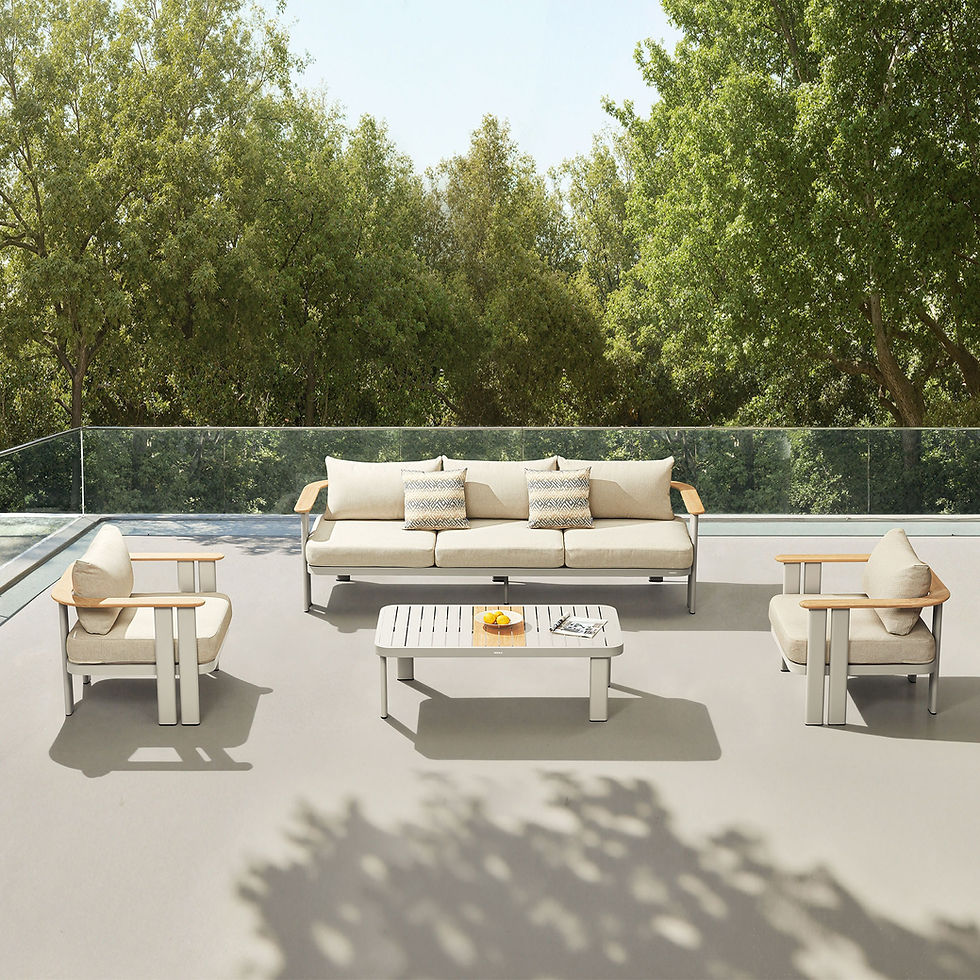
Explore HIGOLD conversation sets and sectional seating options with that record in hand. Choose the configuration that meets your real sitting habits, and resolve missing measurements before you order.
The HIGOLD sectional models shown are design examples. Contact HIGOLD to confirm current model availability and the exact configuration; view the outdoor conversation set collection for current options.

Comments