


3-Piece vs 4-Piece vs 5-Piece Patio Conversation Sets: Which Fits Your Space?
The number in a patio conversation set tells you how many separate furniture pieces are included—not how many people the set seats. A four-piece set might contain a three-seat sofa, two chairs, and one coffee table, giving five people a place to sit. A six-piece set might also seat five but include extra tables.
That distinction is the starting point for choosing well. Instead of asking only, “How many pieces do I want?” compare seating capacity, the sofa-to-chair balance, table surfaces, and the amount of patio each item needs.
What counts as a piece in a conversation set?
Every movable furniture item normally counts as one piece. A chair is one piece, a sofa is one piece, and a coffee table is one piece. Cushions and throw pillows are not normally counted as separate pieces.
This is why two sets with the same piece count can serve different households. One four-piece set may use a loveseat, while another uses a three-seat sofa. One six-piece set may add side tables rather than additional seats.
Before comparing prices or styles, write down the full included-item list. It is more informative than the number printed in the product title.
How common piece counts usually differ
Piece count | A common configuration | What it tends to suit |
|---|---|---|
3 pieces | Two chairs and one table | Two-person conversation area or secondary patio zone |
4 pieces | Sofa, two chairs, one table | Balanced family seating with flexible chairs |
5 pieces | Seating plus two tables, or a modular arrangement | Buyers who need more surfaces or layout flexibility |
6 pieces | Larger seating plan with multiple tables | A more complete lounge zone with added serving space |
These are examples, not fixed rules. Always inspect the included pieces and stated dimensions.
When a 4-piece outdoor conversation set is the practical middle ground
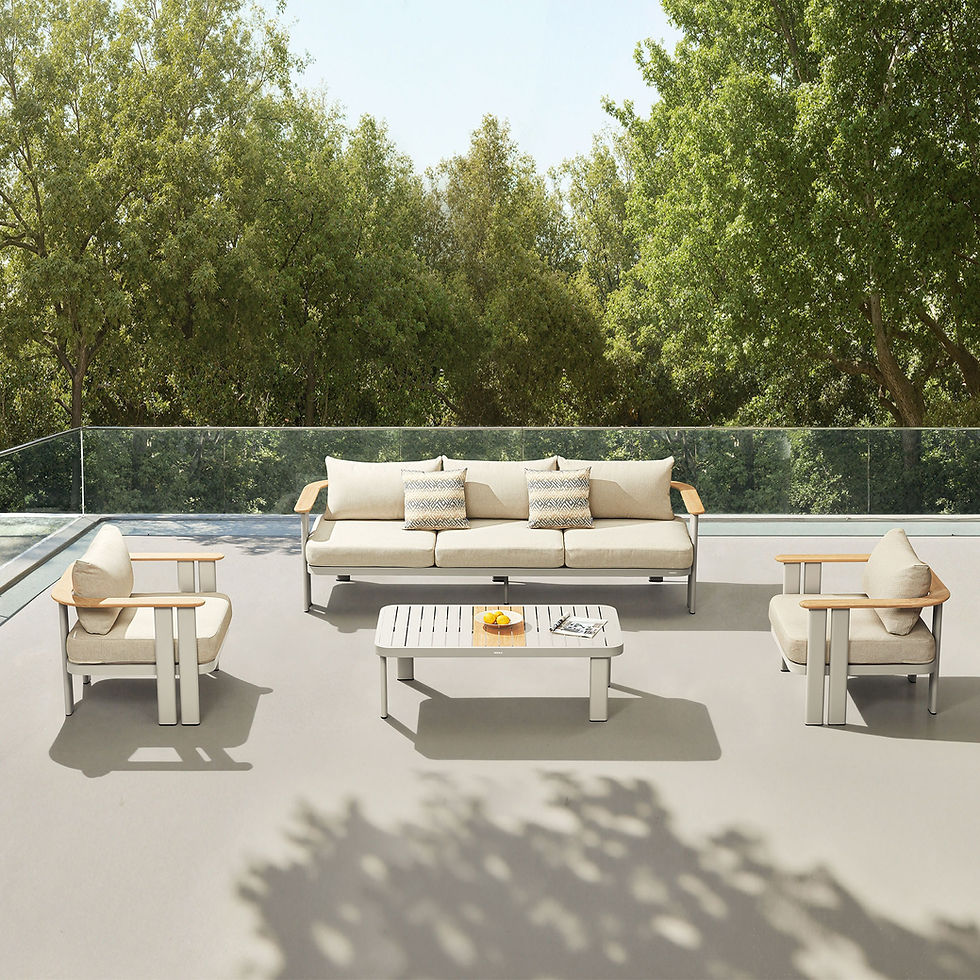
A four-piece layout often creates a clear social arrangement: a sofa anchors one side, two individual chairs face or angle toward it, and a coffee table defines the center. The separate chairs can be repositioned when conversation groups change.
For example, the HIGOLD Denea set includes two single sofas, one three-seat sofa, and one coffee table. The HIGOLD Pardee uses the same broad arrangement—one three-seat sofa, two armchairs, and a table—and is described as seating five. Both demonstrate why “four pieces” can provide more than four seats.
A four-piece set is especially useful when you want a complete zone without managing several small tables. It can also simplify visual planning because the coffee table provides a natural center point.
When more pieces add real value
More pieces are useful when they solve a specific problem. Extra side tables may put a surface within reach of every seat. Separate chairs may make the arrangement easier to adapt. Multiple tables can support food and drinks without crowding one center table.
The HIGOLD AIO set is a useful example. Its six-piece configuration includes two single sofas, a three-seat sofa, two coffee tables at different heights, and a side table. It still provides five seating positions, but the additional pieces expand the number and placement of surfaces.
That is a meaningful benefit for someone who uses the patio for longer gatherings. It may be unnecessary for a household that prefers open floor area and rarely serves food outdoors.
Measure the arrangement, not just the individual items
Product dimensions tell you whether each piece can physically fit. A layout plan tells you whether the full arrangement will work.
Start by marking the sofa footprint with painter’s tape. Add chairs at the angle you expect to use, then place the table outline. Walk every route you use: from the house to the yard, around the coffee table, and toward any grill, pool gate, or steps. Check door swings and access to storage.
Do not assume every chair must face the sofa in a perfect rectangle. Slightly angled chairs often support conversation while reducing the rigid feel of the layout. On a long patio, placing chairs across from the sofa can create a defined zone. On a squarer patio, an L-shaped arrangement may leave a clearer entry path.
Choose by how your household actually uses the patio
Ask four questions:
How many people need a proper seat on an ordinary day?
Do guests prefer individual chairs or shared sofa seating?
How many tables are genuinely useful for drinks, books, or serving?
Will you frequently move pieces, or keep one permanent layout?
A couple may be well served by three pieces. A family of four or five may prefer a four-piece sofa-and-chair set. A frequent host may value a five- or six-piece arrangement with extra surfaces even when the seating capacity is similar.
Piece count buying checklist
Before choosing a set, confirm:
the complete list of included furniture;
the actual seating capacity;
the width and depth of every seat;
the number and height of tables;
whether chairs can move without blocking circulation;
whether the layout works with doors and patio edges;
which pieces need assembly;
how cushions and furniture will be protected or stored.
The best piece count is the one that solves your layout
A higher piece count is not automatically a better value, and a four-piece set does not automatically seat four. Choose the arrangement that provides the right seats, surfaces, and circulation for your patio.
If you want a balanced sofa-and-chair layout, compare HIGOLD’s outdoor conversation sets. The Denea and Pardee show how four pieces can support a complete five-seat zone, while the AIO shows how a six-piece package can add tables without overstating seating capacity.


Comments